Restoring trust in the data the whole business runs on.
The situation
Zillow's brand was built on listings. But the brand tracker showed it wasn't leading competitors on the two dimensions most central to the business: having the most listings, and having accurate, up-to-date ones. The problem was known, but undefined. As her first project, Carol was asked to lead the turnaround.
The insight
The accuracy problem wasn't bad data. It was slow data. The lag between the MLS feed and the live site was quietly eroding trust.
What she did
Defined the three focus areas, aligned the CEO and C-suite behind them, and orchestrated a cross-functional team across product, UX, data, brand, and the MLS partnership, keeping leadership close with a biweekly cadence. Set industry-benchmarked targets for update speed, directed the research and design of the fix, and championed a visible timestamp on every listing so buyers could see exactly when the data was refreshed. In many ways it ran like a launch, bringing an enhanced listing data experience to market.
The outcome
Cut listing update time by roughly two-thirds and drove a measurable lift in brand-trust perception the quarter after launch.
From a single feature to a category narrative for AI in Office.
The situation
Carol launched PowerPoint Designer, one of Office's first AI-powered features. At the same time, research across Word and PowerPoint kept surfacing the same signal. Office felt familiar but old, a mandate rather than a choice, not innovative.
The insight
The opportunity wasn't a feature launch. It was a category story. Pulled together under one narrative, the AI features could reposition the whole brand as an innovator.
What she did
Saw the bigger opportunity in PowerPoint Designer and connected it to a wave of AI features across Editor, Tap (now Viva Topics), Excel, and OneNote. Aligned leaders well beyond her own PowerPoint and Word teams, bringing the Excel and OneNote organizations into one coordinated motion, and used Ignite as the moment to land the broader "AI in Office 365" narrative.
The outcome
Lifted Office's likelihood-to-recommend score by 25% and earned the highest media engagement and sentiment of any Office launch at the time. Carol's role grew from leading PowerPoint and Word to leading AI in Office 365, an early proof of concept for AI in everyday productivity tools.
Syndio · Growth-stage SaaS
Rebranding a point solution into a category-defining platform.
The situation
Syndio was known for one thing, pay equity analysis. To grow and move up-market, it needed to become something bigger, a workplace equity platform, and stand out as original in a crowded tech landscape.
The insight
You don't lead a category by selling a product. You lead it by owning the conversation, so the work was to define "the new way" and seed a category before competitors could.
What she did
Led the rebrand and repositioning end to end, anchored by original research (the inaugural Workplace Equity Trends Report) and expressed through an integrated campaign, "The New Way to Fair Pay," that balanced category education with product demand. Scaled and structured the marketing team to execute the platform strategy, and directed the work across content, design, growth, and sales.
The outcome
The flagship campaign sourced $1.4M in qualified pipeline and influenced $1.2M more on a $20K ad investment, a 14x return on direct-sourced pipeline, while establishing the company in a new category.
A mid-sized PE-backed tech company
Building the launch motion that didn't exist yet.
The situation
The company had grown by acquisition into the dominant player in its market. The next phase had to come from customer expansion, which meant shipping real product value. But it had never launched a tier-one product in market, had no launch readiness process, and was up against aggressive forecast timelines, with much of the product still unscoped five months out from launch.
The insight
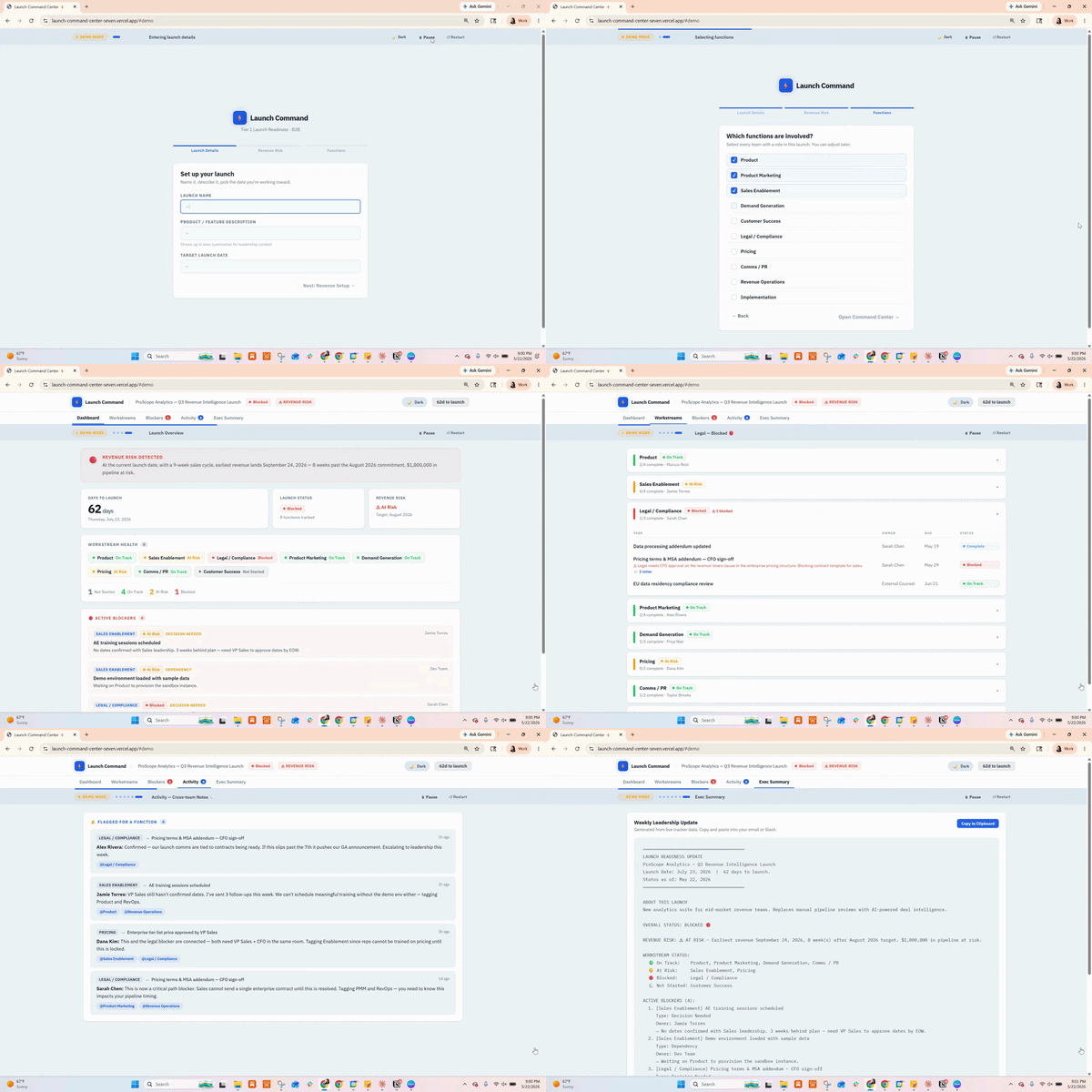
The launches weren't behind because people weren't working hard. They were behind because no one had visibility into what it would actually take to ship, or what it would cost if they slipped.
What she did
Established the GTM launch framework the company didn't have, set the cadence with leadership, and orchestrated readiness across every function. Made the risk visible to product, what was needed to move forward, where the timeline was exposed, and the revenue on the line, which got the organization to move fast. Built the operating model that let a lean team of six scale against a product organization of more than a hundred managing a large, complex portfolio.
The outcome
Four tier-one products launched in market within six months. The experience is what led Carol to build the Launch Command Center, the launch readiness tracker featured below.